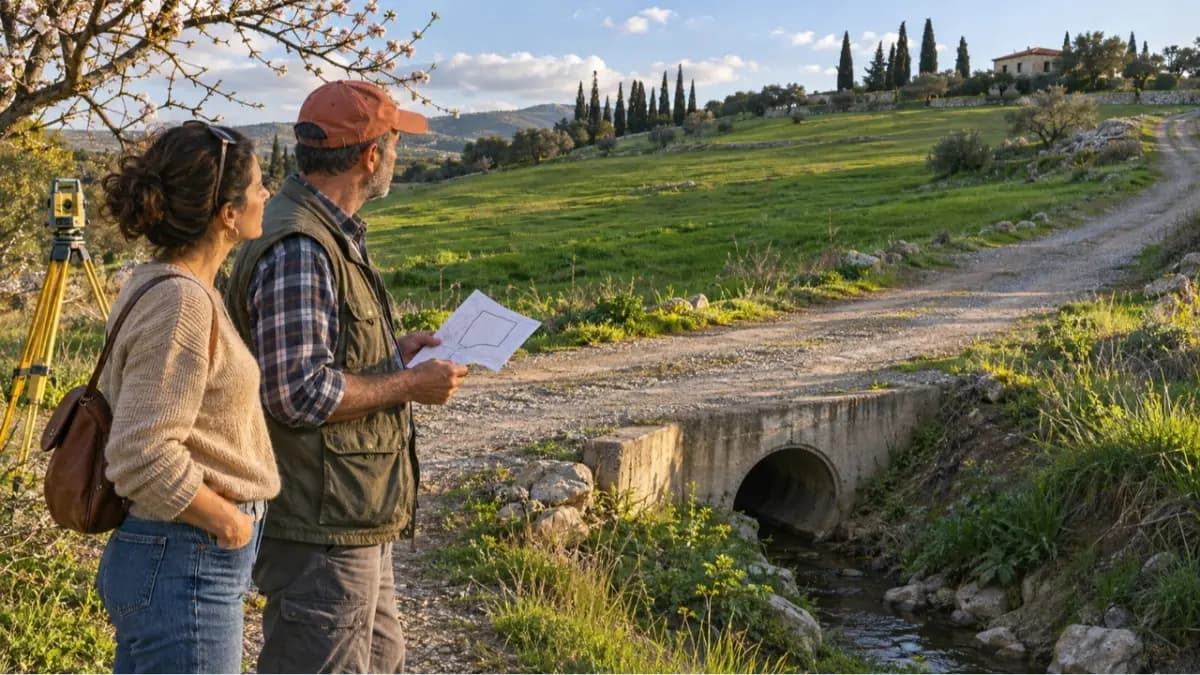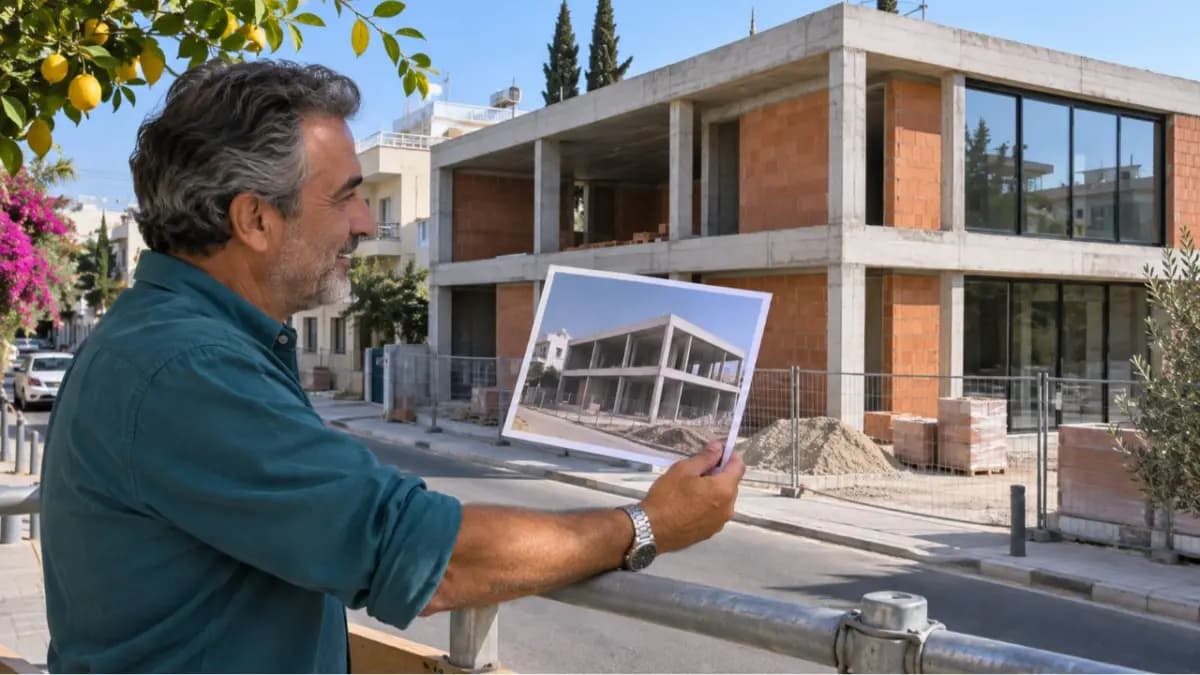
“Under construction”, “completed” and “ready to move in” help buyers judge how close a property is to being usable. Each label describes the stage the seller is advertising. The work on site and the supporting documents need a closer look. An apartment may be fully finished while work continues elsewhere in the building, and keys may be handed over before ownership is registered in the buyer’s name. Exterior photographs show how a building looks; permits document the approved project and the authorised work.
To understand where a property stands, separate four questions: what has been built, which documents support the work, what the seller must deliver under the contract, and who owns the property on the register. This turns a broad label into a specific account of what is ready and what you are still waiting for.
This guide covers the government-controlled areas of the Republic of Cyprus. The rules in the northern part of the island fall outside its scope.
How to read the labels in property listings
Sellers may use the same label differently. For each one, establish what the seller means, which part of the property it covers and what evidence supports it.
Off-plan
The seller offers a future apartment or house through plans, images and a specification. Work may be yet to start or already under way. Ask for approved plans, details of permits and the start of construction, and a contractual description of what you will receive. A rendering illustrates the intended design. The documents and contract explain which permissions have been issued and how changes may be made.
Under construction
The seller is stating that work is in progress. A site at excavation stage and a building nearing the end of its interior finishes can both appear in this category. Ask for a dated progress report, the relevant plans and permits, and a list of outstanding work.
For a house under construction, check the walls, roof, utility connections, access and external works. For a residential development, assess the apartment, its building and the communal areas separately. A development may be advertised as under construction even when one building is finished. When comparing projects, establish which part each completion date covers and what work is due to be finished by then.
Completed
The seller is reporting that construction work has finished. In practice, this may refer to the apartment’s interior while communal areas are still being fitted out. Request a breakdown of completed and outstanding work for the apartment, building and grounds, together with the relevant documents. If a neighbouring phase is still being built, ask about access, barriers around the construction site and deadlines for shared facilities. Compare the seller’s description with the work remaining across the development and the obligations in the contract.
Ready / ready to move in
The seller is stating that the property can be used. At a viewing, the apartment may be furnished and the lights may be on. Check the documents governing its use, the regular utility connections, the equipment and the communal areas. A more detailed viewing checklist appears below.
Handover
The seller delivers the property to the buyer under the terms of the transaction. Outstanding defects, missing items or unfinished communal works may remain when the keys change hands. Compare the handover documents with the contract and record defects and outstanding obligations. Receiving the keys records delivery of the property; defects and registration of ownership require their own checks.
Separate title issued
The seller is stating that a separate title deed has been issued for the apartment. The registered owner may still be the seller. Request the document, check which property it covers and whose name appears as owner. Then establish the steps needed to transfer ownership into your name.
Ownership registered in the buyer’s name
This describes a change in registered ownership. Construction progress and handover are separate milestones. Check the current registration record and the owner’s details. The Cyprus Department of Lands and Surveys treats transfer of ownership as a distinct procedure, separate from the issue of a title deed. Official ownership transfer procedure, in Greek.
A property can be sold before a separate title deed is issued. The official guidance on contracts of sale addresses this situation for a property under construction. After signing the contract and receiving the keys, check the registration record as a separate step. Official guidance on contracts of sale.
How to check what has actually been built
Start by identifying the property precisely: plot, building, floor, apartment number, parking space and storage room, where these form part of the purchase. Make sure the documents and progress report relate to the property you are buying.
Three documents serve different purposes:
- Planning Permit: sets out the approved development and the conditions attached to it.
- Building Permit: specifies the construction work that has been authorised.
- Certificate of Approval: concerns the use of a building or part of it; this is discussed in more detail below.
The official procedure treats planning permission and building permission separately. The documents required and their relevance depend on the property. Official guidance on building permission.
Ask the seller for:
- current approved plans and the relevant permits;
- details of the issuing authority, document numbers, dates and conditions;
- a dated report on completed work identifying who prepared it;
- a list of outstanding work for the apartment, building and communal areas;
- an explanation of approvals still pending and how they affect the next steps.
This list helps you gather material for a review. The permits needed depend on the property’s characteristics and the applicable procedure. Have a specialist establish the requirements for the particular property.
An independent engineer or architect can help compare the construction with the plans. Photographs taken on different dates show visible progress. A specialist adds a review of the documents and an inspection; concealed or enclosed work may require further records or investigation.
If a listing says “80% complete”, ask what the percentage measures: cost, physical work or a schedule of milestones. Alongside the finished façade, establish whether building systems have been tested and how long the remaining approvals may take. For planning a move, ask when the percentage was calculated and how. Systems may still be awaiting tests during construction, so check when those tests are scheduled and when the results will be available.
The Larnaca District Local Government Organisation explains that the designer and the applicant or owner can view the status of an electronic building licensing application. Ask the seller or designer to arrange a check through someone with access to the file. Larnaca organisation’s guidance.
Consider two properties advertised as under construction, both with their structural frames in place. For the first, the seller has supplied a building permit and approved plans, and a specialist has matched them to the property being purchased. For the second, the documents supplied so far contain no evidence that a permit has been issued.
The next steps differ. For the first property, check the work against the documents and clarify the remaining stages. For the second, obtain and review the permits first. Whether a permit was issued remains an open question until the records are checked. The same visible stage of construction can therefore call for a different document review.
What you can change while a home is being built
During construction, buyers may have a chance to choose finishes or agree alterations. The available options depend on work already completed, the building’s structure, its services, the permits and the contract.
Choosing a different tile colour and relocating a bathroom involve different decisions. Moving a bathroom requires a check of technical feasibility and any changes needed to the documentation. Obtain written confirmation from the people responsible for those checks.
Before paying extra for an alteration, get written answers to these questions:
- What exactly will change, and which drawing or specification records it?
- Who has checked technical feasibility and whether further approvals are needed?
- What is the total additional cost, and which work and materials does it cover?
- Will the handover date change?
- What is the deadline for choosing materials, and what alternatives will be offered if they are unavailable?
- Who is authorised to approve the change on the seller’s behalf?
- What happens to the payment if the alteration cannot be carried out?
The agreement should give you a clear basis for checking the finished work: a specific design, price, deadline and allocation of responsibilities. Turn a promise to “do it as you wish” into those concrete terms.
How construction progress affects waiting time and costs
A status label describes the property’s condition; the contract sets payment dates and triggers. If a payment depends on completion of a construction stage, establish which document verifies that stage and who issues it. Check each payment against the agreed procedure and the evidence of progress.
Compare payments to the seller with the release of loan funds, if you are borrowing, and your expected moving date. Check the financing terms and how long you can extend your temporary accommodation. A later move can increase your costs even when the purchase price stays the same.
Suppose the wait lasts an extra three months. With rent of €1,200 a month, storage of €100 and additional financing costs of €250, the monthly total is €1,550: €1,200 + €100 + €250. These are assumed figures for the calculation; actual rents and financing terms depend on your circumstances.
Three months would cost €4,650. At the same monthly rate, six months would cost €9,300.
If you are buying without a loan, remove the financing amount. Substitute your own figures for the other costs. Utilities, a second move and other possible expenses would need to be added where relevant. Track payments towards the agreed purchase price separately from extra costs caused by a delay.
Keep promised compensation separate from your cash reserve until you have checked the entitlement and the conditions for receiving it. The steps to take after a delay, and the consequences of changing payments, should be checked against your contract.
When a completed property is ready to live in
Two questions need their own answers: whether the property can be used under the applicable documents, and whether it works as a home in practice.
Section 10 of Cyprus’s Streets and Buildings Regulation Law sets out a general requirement for a Certificate of Approval before a building or part of it is used. Under the general procedure, the competent authority issues it once satisfied that the work complies with the permit. An engineer’s report and this certificate serve different purposes: the authority assesses compliance with the permit, while the buyer also checks the specification against the contract. The law includes special provisions, so the applicable requirements, type of document and conditions should be checked for the particular property. Text of the law, section 10.
Distinguish an issued certificate from an application awaiting a decision. Also check which part of the building it covers. The Larnaca organisation’s guidance allows for an application concerning part of a building, so establish the position for the other parts of the development separately. Guidance on applying for the certificate.
During the viewing, check:
- Water, electricity and drainage. How are the connections arranged, what works now, who sets up the service accounts and who pays for consumption?
- Equipment. Do the lift, air conditioning, ventilation and other systems included in the specification work? Which tests have been carried out, and which records will be provided?
- Access. Can you use the entrance, access road, parking space and storage room? What restrictions remain because of construction?
- Communal areas. What is finished, what remains and how does this compare with the facilities promised?
These points provide a basis for the viewing. A specialist can define the technical inspection needed for the particular building.
An apartment might have finished interiors and a fitted kitchen while access still passes through a work area and some equipment awaits commissioning. The seller may regard the interior as complete. For the buyer, the practical questions are when normal access will open, which works affect moving in and when the equipment will be operational.
What to record at handover
Bring the contract, plans, specification and agreed alterations to the inspection. Compare what was promised with the property being delivered.
Describe each issue so it can be located and checked again. Replace “poor finish” with the room, exact area, type of defect and a photograph.
The inspection and handover records should include:
- the date, participants and precise property identification;
- defects and missing items;
- agreed actions, responsible parties and deadlines;
- arrangements for access to carry out repairs and a follow-up inspection;
- keys, access devices, instructions and documents provided;
- meter numbers and readings;
- outstanding communal works;
- the status of approval and ownership registration documents.
If an air-conditioning unit specified in the contract has not been installed, for example, name the equipment and record how the obligation will be fulfilled. Record receipt of the keys separately from the check of the specification against the contract.
Before signing, clarify the effect of the handover record, any clauses concerning claims, and the warranty terms. Arrangements for withholding a payment and deadlines for remedying defects depend on the contract and applicable rules; establish them before signing the record.
What to check alongside the condition of the building
Review the registration position separately from the inspection findings: who owns the property now, and what steps remain for the buyer?
Registration documents record ownership. The inspection establishes whether the air conditioning works and whether the finishes match the contract.
Before deciding to buy or move in, gather four short answers:
- Work: what is ready in the apartment, building and grounds, and what remains?
- Documents: what has been issued, which parts does it cover and which questions remain open?
- Handover: what must the seller deliver and when, and how will outstanding obligations be recorded?
- Ownership: what is the current registration position, and which steps remain?
Each unanswered question points to a practical next step: obtain a document, arrange an inspection or clarify a contract term. The listing’s status label is a starting point. Base your decision to move in on the answers to these questions about the specific property.