Winter in Cyprus can mean a sunny walk by the sea followed by an evening with the heating on. On the west coast, average daytime highs are around 19°C in December and 17°C in January, with overnight lows of about 10°C and 8°C. These figures cover 1983–2010; conditions on any particular day will vary. Inland areas are colder, and snow is possible in the mountains. Winter climate data, page 4.
For a holiday, that gives you a starting point for packing and planning outings. For year-round living, the questions become more practical: will you be warm at your desk, where will the washing dry after rain, can you catch a bus home after work, and what will everyday comfort cost?
Cyprus in winter may suit you if you enjoy spending time outdoors when the weather allows, are comfortable with cool evenings and find a home with effective heating. If daily swimming and a full choice of resort activities are essential, the winter season may fall short of your expectations.
Before deciding to move, look at three things: the local weather, the property itself and your family's ordinary week. If you work remotely, start with the workspace and heating costs. With children, focus on bedrooms and the school journey. Without a car, check both the outward and return trips. Then use the plan below to try living there for a month.
This article covers the government-controlled areas of the Republic of Cyprus. Service information relates to 2026; the observation periods for climate figures appear alongside the data.
Cyprus in December and January: what weather to expect
December to February is winter: mild on the coast, colder in the mountains, with rain and changeable weather. Snow is possible in the Troodos Mountains, so time a trip around actual conditions. The official climate overview describes this seasonal pattern.
How to read the temperatures
Each pair below gives the mean daily maximum first, followed by the mean daily minimum. These are the averages of the highest and lowest temperatures recorded each day for that month over the stated period. A pair such as “18.9 / 10.0°C” gives a sense of the difference between daytime and night-time conditions; individual days may be warmer or colder.
The source is the Department of Meteorology, page 4 of the bulletin linked above. The west coast and inland figures cover 1983–2010; the mountain figures cover 1981–2010. Each set represents its own zone. For a particular property, elevation and location also matter.
December: a mild coast and colder mountains
- West Coast: 18.9 / 10.0°C.
- Inland: 17.3 / 7.0°C.
- Mountainous Areas: 8.3 / 2.6°C.
If you view an apartment at sunny midday, arrange a second visit in the evening. You can then assess the rooms at a time when you would usually be relaxing at home and see the heating in use.
January: a test of heating and daily routines
- West coast: 17.1 / 8.3°C.
- Inland: 15.5 / 5.4°C.
- Mountain areas: 6.3 / 0.7°C.
January is colder than December in these records. For someone working from home, comfort means being able to sit at a desk for several hours. For a family, it may mean heating several rooms at once. During a viewing, spend time in each space you expect to use regularly.
February: keep heating in the budget
- West coast: 17.1 / 8.1°C.
- Inland: 16.0 / 5.3°C.
- Mountain areas: 6.7 / 0.5°C.
February's average overnight lows are close to January's. If you rent until spring, keep an allowance for heating, even if some days turn out warm.
Rain is part of the winter picture too. In the historical data above, mean monthly total precipitation for December is 90.1 mm on the west coast and 157.3 mm in the mountains. This measures the amount of water that falls. When choosing a day for a walk, use a forecast showing when rain is expected and how long it may last.
Weather helps you choose an area; a viewing helps you assess the home. A well-maintained mountain house with suitable heating may suit your routine better than a seaside apartment with a cold bedroom.
How to assess a home for winter living
A viewing should show you how everyday life would work in that particular property. “There is air conditioning” leaves several questions unanswered: whether the units provide heating, which rooms they serve and how previous occupants used them.
Heating each room and providing hot water
Ask for the equipment to be switched on in every room you plan to use. Find out when it was serviced and how long it had been running before you arrived. A preheated home and one that has stood empty will feel different.
Check whether the equipment switches off automatically and needs restarting during the night. Ask to see the controls: can you change the settings yourself and adjust rooms separately?
Follow the same process for hot water. Find out how it is heated in winter, how to turn the heating on, how long the water takes to warm up and whether there is enough for everyone to shower in turn. Establish who pays for the energy used.
Windows, moisture and drying laundry
Check that windows and doors close properly. Look for damaged seals and signs of water around window reveals and on ceilings. Inspect accessible corners and walls near furniture. If walls have recently been painted, ask why and whether stains returned after earlier repairs.
Condensation occurs when water vapour turns into liquid water, which can leave droplets on cold windows. Damp patches can also have other causes, such as a leak or water entering from outside. If marks keep returning or the owner's explanation is unclear, ask a specialist to identify the cause and recommend a solution.
The United States Environmental Protection Agency (EPA) recommends keeping relative humidity below 60% where possible, ideally between 30% and 50%. This measure describes how close the air is to saturation with water vapour at a given temperature. Use the figures as a household guide to moisture control. To assess the home, compare several readings in occupied rooms with the condition of windows and walls. Guidance on moisture and mould.
Picture an ordinary evening: dinner is cooking, someone is showering and the washing machine has just finished. Where does moist air from the kitchen and bathroom go? Where will laundry dry when rain keeps it off the balcony? Include any extra equipment you would need in your rental requirements and budget.
Which bills are useful?
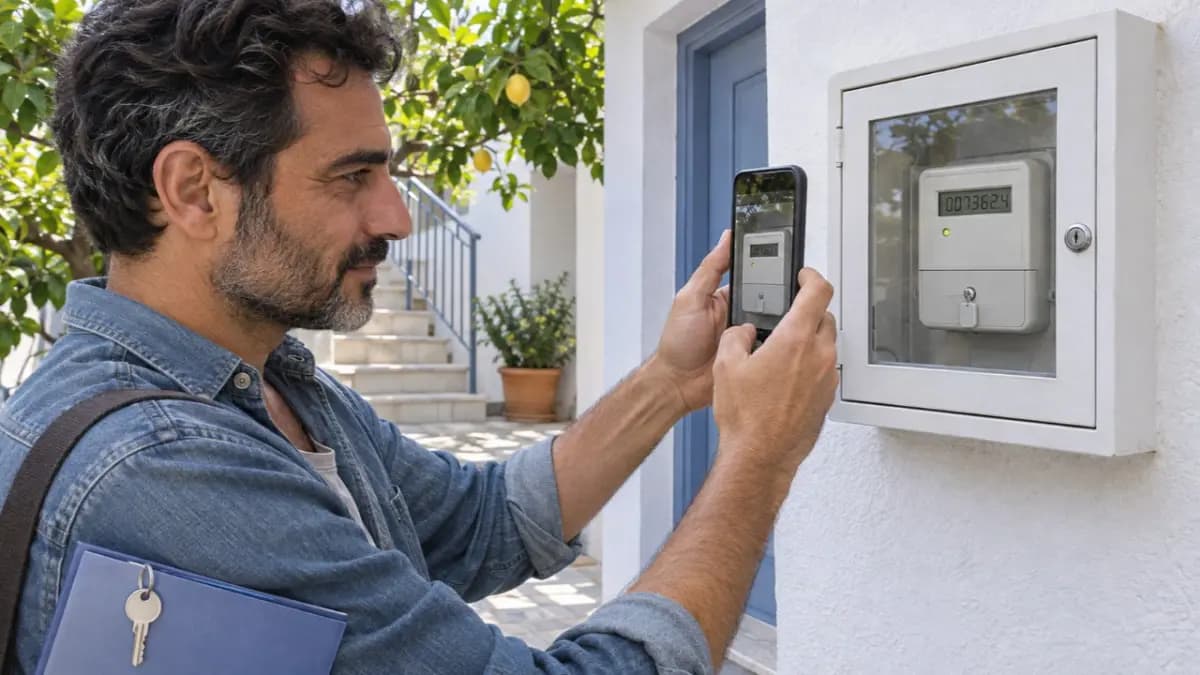
Ask for a complete winter bill showing the billing period, consumption and whether the meter readings were actual or estimated. Find out how many people were living there. This helps you compare costs over similar periods and with similar patterns of use.
Bills from occupants with habits like yours are especially useful. A couple working from home every day should look for a period when the property was continuously occupied. A family using all the rooms should ask which rooms were heated and for how many hours a day.
If an Energy Performance Certificate (EPC) is available, request it along with equipment servicing records. The certificate assesses the building's energy performance. Consider it alongside the heating you see working during the viewing and bills from a comparable household routine.
Your winter viewing checklist
Save these points in your notes and complete a separate record for each address.
- Viewing conditions. Date, time and weather; whether the home had been empty; when the heating was switched on. Keep the owner's account separate from your own observations.
- Heating. What works in each room you will use, how it is controlled and whether it switches off automatically. Record anything you still need to see at a second viewing.
- Windows and doors. Gaps, damage or water marks; promised repairs and when you can check the result.
- Moisture. The location of stains or smells, what is known about their cause and any work already carried out. Ask the owner's permission before taking photographs.
- Daily routines. How water is heated, the bathroom is ventilated and laundry dries in wet weather. Can you follow your usual routine?
- Documents and payments. Which winter bills you have received, their periods and occupancy levels; what the rent includes and what is charged separately.
- Access and maintenance. The evening walk from the bus stop or parking space, any visible drainage problems, who handles faults and which works have been agreed in writing.
Your notes might read: “Apartment A, evening. Heating was on before arrival; duration unknown. Bedroom heating still to be demonstrated. Winter bill to follow.” The next step is to obtain the bill with an explanation of how the home was used, then revisit the bedroom with its heating running.
Sort the findings into three groups: checked, more information needed, and repair or inspection needed. For the last two, record who will act and what happens next. Only factor promised repairs into your assessment of the property once the work is complete and you have checked the result.
What stays open outside the holiday season?
List the places your week depends on: shops, work, school and regular activities. Each has its own calendar. Check everyday services first, then choose winter leisure options and alternatives for closures.
The following examples from 2026 show how service schedules vary. Confirm holiday hours before travelling.
Groceries and everyday shopping
Most Alphamega stores list opening hours of 07:00–21:00 Monday to Saturday and 09:00–21:00 on Sunday. The Trimiklini branch lists 06:00–21:00 every day. It could be useful if you live in the mountains; check the journey from your chosen home. Store opening hours and exceptions.
Choose a specific branch and try the route. If you shop after work, allow time for the evening visit, the return journey and carrying your groceries. Check holiday changes with the store separately.
Does the bus timetable fit your day?
OSEA routes 101/102 connect Ayia Napa, Protaras and Paralimni in both directions. Each timetable has a validity period: the summer 2026 edition, for example, covered 25 May to 31 October. For December or January travel, use the timetable covering your winter dates. Routes and timetable validity.
If the timetable you need is missing from the website, call the operator on +357 23 819090, as listed in its contact information. Give the route, stops, date and times: for example, “I need to arrive by 09:00 and return after 19:00.” Ask separately about weekdays, weekends and public holidays.
If the morning bus works but there is no suitable evening return, add another way home to your housing budget. You can then judge whether the address works without a car and whether the lower rent still saves you money.
School and working from home
The Omodos school calendar lists the Christmas break as 24 December 2026 to 6 January 2027 inclusive. Choose dates outside the holidays to experience an ordinary school week. School calendar for 2026–2027.
Check your own school's calendar, start and finish times, transport and after-school activities. Discuss the possibility of a one-month enrolment with the school in advance. You can test the journey at the relevant times before deciding on enrolment.
If you work remotely, spend a normal working day in the apartment. Make a video call from your intended workspace. Check the connection during working hours and see whether you can maintain a comfortable temperature at your desk.
Leisure and social life
The Archaeological Park of Kato Pafos lists winter opening hours of 08:30–17:00 daily, from 16 September to 15 April. It operates year-round, except on Christmas Day, New Year's Day and Orthodox Easter Sunday. Official visitor information and opening hours.
WaterWorld in Ayia Napa announced 31 October 2026 as its final day of the season. Choose other activities for regular winter outings with children. Season closing announcement.
For a longer stay, add things you would like to do regularly: a sports group, a language course, meeting friends or visiting a favourite café. Find out their winter opening days, finishing times and how you would get home. A quiet resort street can feel appealing at the weekend and isolating on an ordinary weekday evening. A trial stay lets you see how it feels to you.
For each essential service, record the address, suitable hours or bus departure, and an alternative. For Alphamega in Trimiklini, for example, you might note the published 06:00–21:00 hours, save the store link and confirm opening times before a holiday visit. You will gradually build a list of places that are convenient from your particular home.
Everyday journeys and mountain trips need different checks
Before driving from a coastal town into the mountains, check the destination forecast and conditions for the return journey. Weather can vary along a single route. Establish whether the road is open and your destination is operating.
Work through four checks before setting off:
- Local weather and timing. Read the forecast for your destination and current weather warnings. Check the area covered and the warning's start and end times.
- Road conditions. Look for recent police road updates for your route and establish whether it is open. Clarify the status of any uncertain section before leaving.
- The vehicle. Where restrictions apply, check them against the car's equipment and rental conditions. If a road is closed, take another route or postpone the trip.
- The destination and return. Confirm opening hours, allow time to get back and have another plan for closures or unsuitable conditions.
Walk the final stretch of your everyday journey too, from the parking space or bus stop to the front door. Look at evening lighting, drainage after rain and how easy it is to carry shopping. Choose ordinary weather conditions in which it is safe to go out.
How to plan a one-month winter trial
A trial is useful when it resembles the life you intend to lead. If you plan to work from home and take a child to activities, a month of holiday excursions tests a different routine. Choose a property and schedule that let you use the same rooms, cook, wash clothes and travel much as you would after moving.
Build the budget by listing the costs first
Before moving in, get a price for your exact dates and record:
- rent and included services;
- electricity, water, other energy sources and communal building charges;
- food and household shopping;
- transport, including backup journeys;
- connectivity and workspace costs;
- children's activities, leisure and other regular needs;
- one-off purchases and unexpected expenses.
Track the refundable deposit separately. You need the money when you move in; if it is returned in full, it comes back into your budget. For offers with utilities included, ask which services are covered, whether electricity has a usage allowance and how excess consumption is charged.
Send the same enquiry to the owners of your shortlisted properties so you can compare their answers:
We plan to stay from [date] to [date]. There will be [number] of us, working from home [number] days a week. What is the total charge for this period? What costs extra? Is there an electricity allowance, and how is any excess charged? How is each room heated? Could we see a winter bill and find out how the apartment was used during that period?
Ask for the price for your intended stay: a winter month and a year-long rental may have different terms.
What one electric heater could cost
Suppose the apartment has an electric heater that draws a constant 1.5 kW while running. Using an illustrative price of €0.32 per kWh, we can calculate the cost of running that appliance. Other devices and separate bill charges are additional.
A 30-day log looks like this:
- Days 1–7: 4 hours a day. 7 × 4 × 1.5 = 42 kWh; cost: €13.44.
- Days 8–14: 6 hours a day. 7 × 6 × 1.5 = 63 kWh; cost: €20.16.
- Days 15–21: 3 hours a day. 7 × 3 × 1.5 = 31.5 kWh; cost: €10.08.
- Days 22–28: 5 hours a day. 7 × 5 × 1.5 = 52.5 kWh; cost: €16.80.
- Days 29–30: 4 hours a day. 2 × 4 × 1.5 = 12 kWh; cost: €3.84.
The heater ran for 134 hours, used 201 kWh and cost €64.32 over 30 days at the assumed price. Add hot water, cooking, lighting, heating other rooms and any separate bill charges.
Running the same heater for another two hours every day, under the same assumptions, adds 1.5 × 2 × 30 = 90 kWh, or €28.80, over 30 days. Total consumption becomes 291 kWh and the cost €93.12. This is why another household's bill is most useful when you know how much time people spent at home and which appliances they used.
For your own apartment, use actual consumption and the charging terms for the relevant period. An air conditioner may vary its power draw or cycle off, so use measured consumption where available. When reading equipment specifications, distinguish between electrical input and heat output.
What to record each day
Make a brief note each evening:
- who was home and for how long;
- which rooms you used and how you heated them;
- how comfortable you felt in the morning, while working and before bed;
- the weather, when you aired the rooms and when you dried laundry;
- main meter readings on chosen days and actual payments;
- anything awkward: journeys, shopping, connectivity, drying clothes or getting home in the evening;
- who you contacted about a problem and what changed afterwards.
If you measure temperature and relative humidity, use the same location at comparable times. Note when you opened windows and switched on the heating so you can interpret changes between readings.
Your entry for day twelve might read: “Both worked from home. Main meter: 3,100 in the morning, 3,118 kWh in the evening. Heater ran for a total of 6 hours between readings. Laundry was still damp the next morning; need somewhere to finish drying it.”
The apartment used 18 kWh between those readings. The heater, drawing a constant 1.5 kW, accounted for 9 kWh: 1.5 × 6. Other devices used the remaining 9 kWh; separate measurements would be needed to allocate that consumption between them. Alongside the energy figures, the entry highlights a practical problem to solve: drying the washing.
What to check over four weeks
Week one: ordinary weekdays. Try your morning routine, the start of the working day, shopping and evening journeys home. Begin the diary and record the initial meter reading.
Week two: extended time at home. Assess the workspace, bedrooms, hot water and laundry. If it rains, note how daily life and the condition of accessible surfaces change.
Week three: weekends and alternatives. Try your usual leisure activities, another shop or a different way home. Follow up on questions left open at the viewing.
Week four: assess the home against your requirements. Compare actual spending with the plan and list outstanding problems. For each one, establish whether it can be resolved, by whom and by when.
Before the trial begins, set your own limits: your monthly budget, acceptable travel time and which rooms need to be comfortable at the same time. At the end of the month, compare your observations with them:
- Suitable: spending stays within your limit, your ordinary week works and significant problems have been resolved.
- Suitable after changes: you know what needs fixing, how it will be done and when you can check the result. A promised window repair, for example, should be completed and then checked.
- Look for another option: an essential requirement remains unmet, such as a workable journey home from work or comfort within your budget.
This gives your budget, habits and daily journeys a clear place in the decision.
After an unusually warm month, add information about how the home performs in colder periods. If your stay coincided with school holidays, check the school journey during term time. For year-round living, assess summer shading and cooling separately.
Once you know which rooms you need, what you can spend and where you travel regularly, you can browse rental properties in Cyprus. Use the viewing checklist above to request details about heating, winter bills and living arrangements for your shortlist.