Moving to Cyprus means bringing several plans together: establishing a basis for each family member to live there, preparing documents, keeping money accessible, finding suitable housing, and arranging school and healthcare. Knowing which document unlocks the next step helps reduce repeat visits and unnecessary costs.
Start with three questions: what will your basis for residence be, what work do you intend to do, and who is moving with you? Your answers shape the timetable, the paperwork and the requirements for your first home.
This guide covers the areas of the Republic of Cyprus under the effective control of its government. The stages before departure, after arrival and one month later help organise the move. Check the statutory deadlines for your particular procedure separately, using the current application process and document list.
Before you commit: establish a residence route for everyone
Check each family member separately
Create a separate record for every adult and child. Include nationality, family relationship, purpose of the move, intended work and the basis for a longer stay. Add the official procedure, its document list and the application deadline.
For example, a couple in which one spouse is an EU citizen and the other is not may need different applications. Track each spouse’s paperwork separately.
For EU citizens, this guide considers residence lasting more than three months, subject to the relevant conditions. Apply for a Registration Certificate (MEU1) within four months of entry. The three-month threshold concerns the length of residence after which the conditions for a longer stay apply; the four-month period is the application deadline. Document issue follows its own timetable. The grounds and documents differ for employees, self-employed people, students and people with sufficient resources. Registration procedure and official document list.
MEU1 also covers citizens of the European Economic Area and Switzerland: Norwegian and Swiss citizens use this registration route when they meet its conditions. The examples below use EU citizenship for simplicity. Residence and registration conditions: sections 9–10 of Law 7(I)/2007.
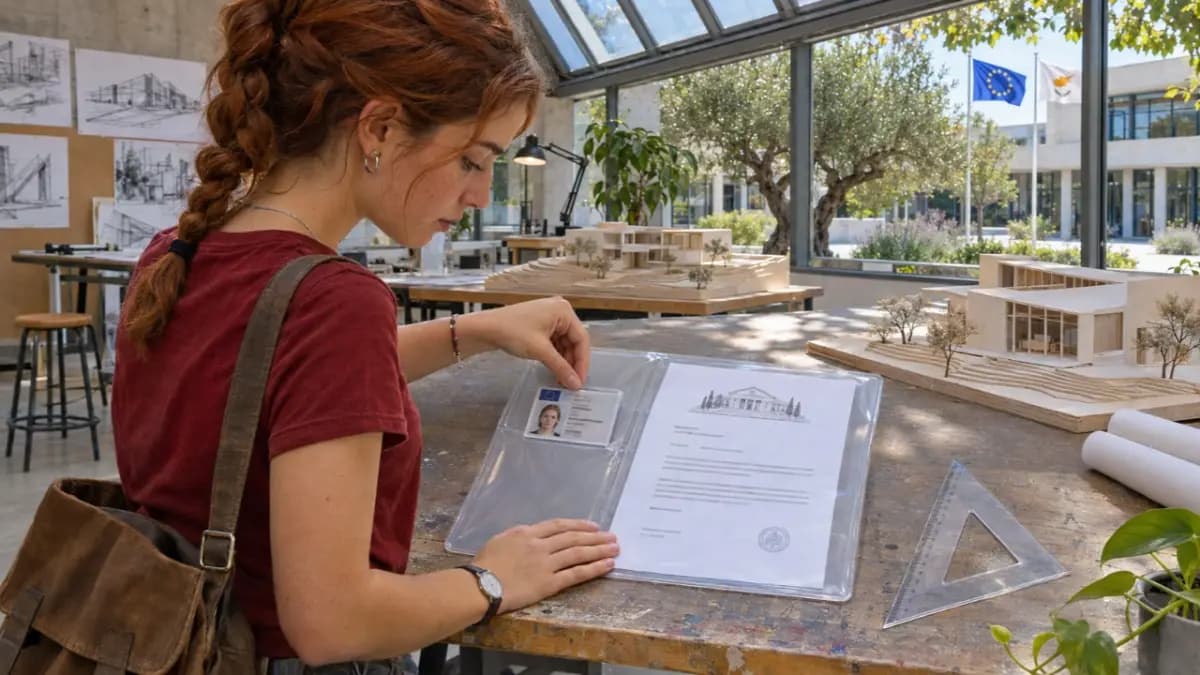
A family member of an EU citizen who is a citizen of a country outside the EU, the wider EEA and Switzerland may qualify for a Residence Card (MEU2) under the family procedure. Apply within four months of entry. The EU citizen must be present when the application is submitted, so arrange the joint visit and documents in advance. This route covers the specified categories of relatives. Family procedure and official document list.
If nobody in the family has citizenship of an EU country, another EEA country or Switzerland, start with the main applicant’s purpose: employment in Cyprus, remote work for an overseas company, study or residence without employment. Find the relevant category on the Migration Department website and check whether it allows accompanying family members. Then establish the spouse’s and child’s entry and residence routes, each adult’s work rights and every application deadline. Use the conditions specific to each category.
Check work rights and healthcare arrangements
Before making major payments, answer five questions:
- On what basis will each person enter Cyprus?
- What allows them to stay for the intended period?
- Does that residence route permit their planned work?
- What tax and insurance obligations arise in their circumstances?
- How will healthcare be paid for from day one?
Pay particular attention to the second adult’s position. Under the Cyprus Digital Nomad Visa Scheme, for example, accompanying family members can live in Cyprus, while work or economic activity in the Republic requires a separate qualifying basis. This could reshape a family budget that relies on two incomes. Scheme conditions for remote workers and their families.
Renting or buying a property addresses your housing needs. Check eligibility for residence separately under the relevant procedure.
Compare family situations
A family of EU citizens. Both spouses and their child are Polish citizens. One adult has a job offer in Cyprus. Before departure, the family checks the employer’s documents, the registration grounds for the other adult and child, and healthcare cover for everyone. They also choose an area and contact a school. After arrival, they gather suitable proof of address and apply under their respective categories.
A family with different citizenships. Consider a married couple with a child under 18. Their procedures and documents can be organised as follows.
First adult: a Polish citizen taking a job in Cyprus.
- Procedure: registration as an EU citizen.
- Work: under an employment contract, with the required registrations.
- Documents: the official employee checklist linked above.
Second adult: the spouse, a citizen of a country outside the EU.
- Procedure: a residence card as an EU citizen’s family member, subject to its conditions.
- Work: the applicable family route provides access to employment, including self-employment. Work rights arise from this family basis.
- Documents: the official family checklist, including evidence of marriage.
School-age child: a citizen of a country outside the EU.
- Procedure: a residence card based on the relevant family relationship, subject to the conditions.
- Work: employment is outside this child’s plans; school arrangements begin before the journey.
- Documents: the family checklist, birth documents and evidence of parental responsibility where applicable.
A family with no EU, other EEA or Swiss citizenship. One adult works remotely for an overseas company and is considering the digital nomad scheme. Before paying for the move, that adult checks eligibility and the application procedure. Their spouse and child under 18 check the accompanying-family provisions and their own documents. The spouse intends to work in Cyprus, so the family needs to establish a suitable basis for that work or revise the employment plan before moving. Official procedure for remote workers and accompanying family.
A different procedure may apply to the family of a Cypriot citizen, an unmarried couple, an adult child or someone with a special status. If you are moving alone, accompanying-family tasks may fall away, while the residence, work, money and healthcare checks still apply.
Before departure: prepare documents and calculate your reserve
Build your checklist around each recipient’s requirements
Start with the current list for your chosen procedure, then add the bank’s, school’s and insurer’s requirements. Several organisations may need the same document, with different conditions for accepting it.
For every document, record who needs it, whether an original is required, whether it needs translation or authentication, how recent it must be and when it must be ready.
Check these groups:
- Passports and identity documents. Validity, entry and application requirements, and consistent spelling of names.
- Family documents. Marriage and birth certificates, evidence of parental responsibility and any consents needed in your circumstances.
- Work and funds. Employment contracts, proof of employment, bank statements and evidence of the source of funds, as requested by each recipient.
- Certificates and medical documents. Order those required by the applicable checklist. Someone else’s account of their move is a reason to check the requirements before ordering a police certificate or medical examination.
- School records. Documents from the previous school, vaccination information and other materials requested by the chosen school or education authority.
- Insurance. The policy, scope of cover, start date and procedure for seeking care.
Confirm requirements before ordering documents. A certificate issued too early may fall outside the accepted age limit by the time you apply.
Document authentication and translation are separate steps. Some official documents exchanged between EU countries benefit from simplified rules, including exemption from an apostille. Eligibility depends on the document, the issuing country and the recipient. Official guidance on public documents within the EU.
Keep readable digital copies separately from the originals. Carry the documents needed during the journey and at your first appointments with you.
Maintain continuous healthcare cover
Ask the insurer whether the policy suits your purpose of travel and immigration procedure, which conditions and appointments it covers, where it applies and how renewal works. If you need ongoing treatment, arrange continuity of care and obtain medical records in advance.
Eligibility for Cyprus’s General Healthcare System (GeSY/GHS) depends on your category and the relevant conditions. Establish the category that applies and provide its required documents. Keep suitable cover in place until enrolment is confirmed. Official healthcare beneficiary categories.
Work out how much money must remain accessible
Separate the budget into outstanding one-off costs, deposits and advance payments, running costs, and a reserve for delays. Even a refundable deposit ties up cash: relying on its immediate return to pay for your next home creates a funding risk.
One-off costs include tickets, documents, translations, shipping and initial household purchases. Running costs include housing, food, transport, communications, healthcare cover and children’s expenses. Record when each payment is due and how you will make it.
Suppose you still need to pay €1,200 in one-off costs and €2,400 in deposits and advance payments. A possible delay would cost another €1,800 a month for two months. You also set aside €900 as an additional buffer.
The outstanding payments and two months of waiting would require €1,200 + €2,400 + €1,800 × 2 + €900 = €8,100. Another month on the same terms takes the total to €9,900. The €1,800 monthly figure covers costs beyond those already included in advance payments. Budget separately for ordinary living costs during your planned stay wherever they sit outside this calculation.
Replace these illustrative figures with your own written quotes and bills. Also account separately for the immigration procedure’s financial requirements, which have their own amounts and supporting evidence.
Arrange your belongings and close out the old address
Decide what to pack, ship, leave behind or buy after moving in. Check which furniture and appliances the new home already has before booking transport.
Ask the mover for a written quote listing packing, delivery, storage, loading and carrying items upstairs. Check insurance cover, exclusions and the damage-claim procedure. Make an inventory, photograph valuable belongings and label boxes by contents and destination room. Check customs requirements for the country of dispatch and the goods involved; ask the customs authority about the conditions for any relief from charges.
Pack a separate bag for the first few days with clothes, toiletries, chargers and essential medical supplies. Check medicine transport rules in advance. If pets or a vehicle are coming with you, prepare separately for their import requirements.
Arrange the end of your previous tenancy, utility payments and key handover. Keep meter readings and payment records. Ask your bank how to update your address and retain access after the move. Check that you can receive banking messages and recover access to important accounts.
Your first home: check the address, costs and daily journeys
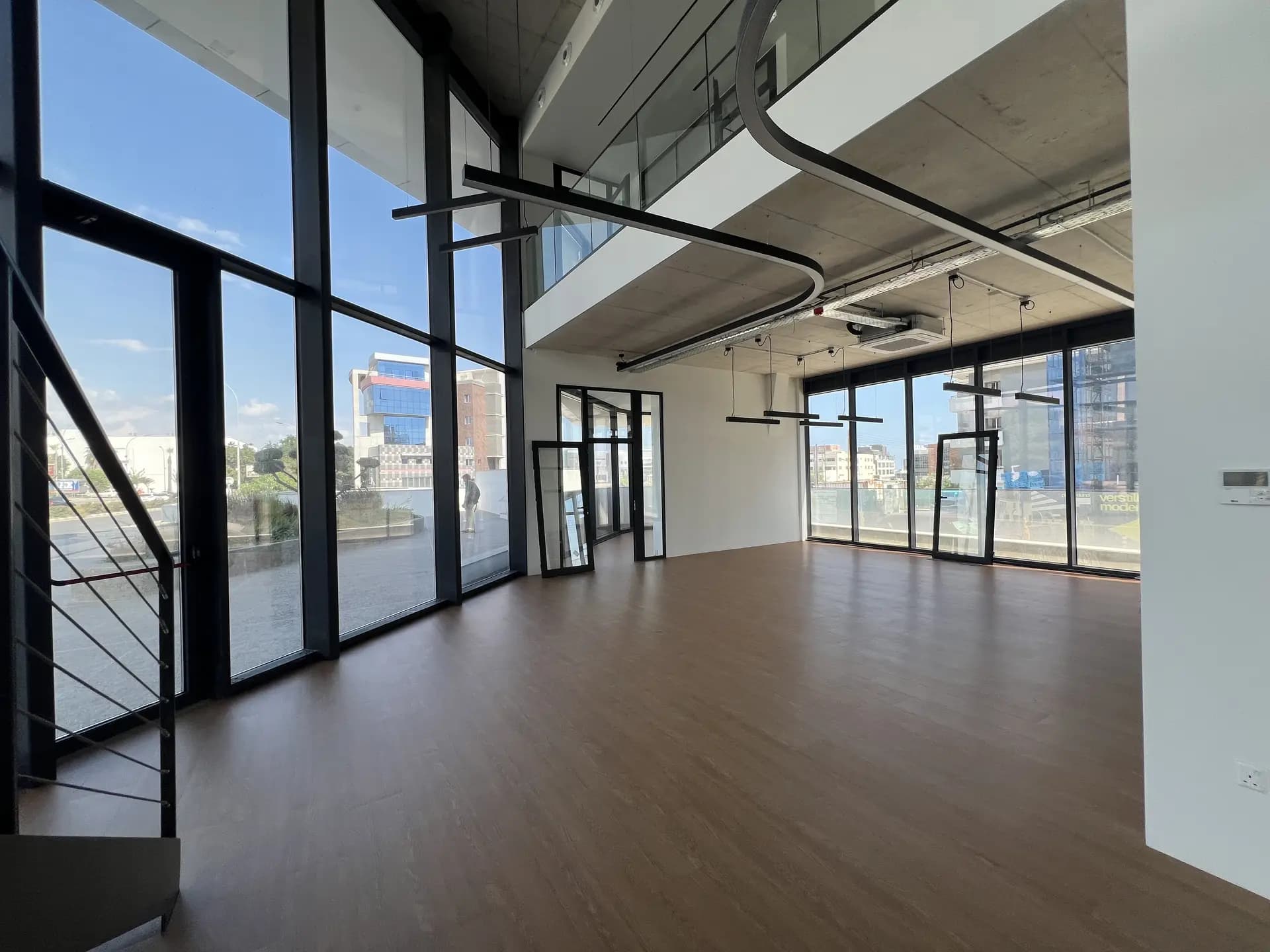
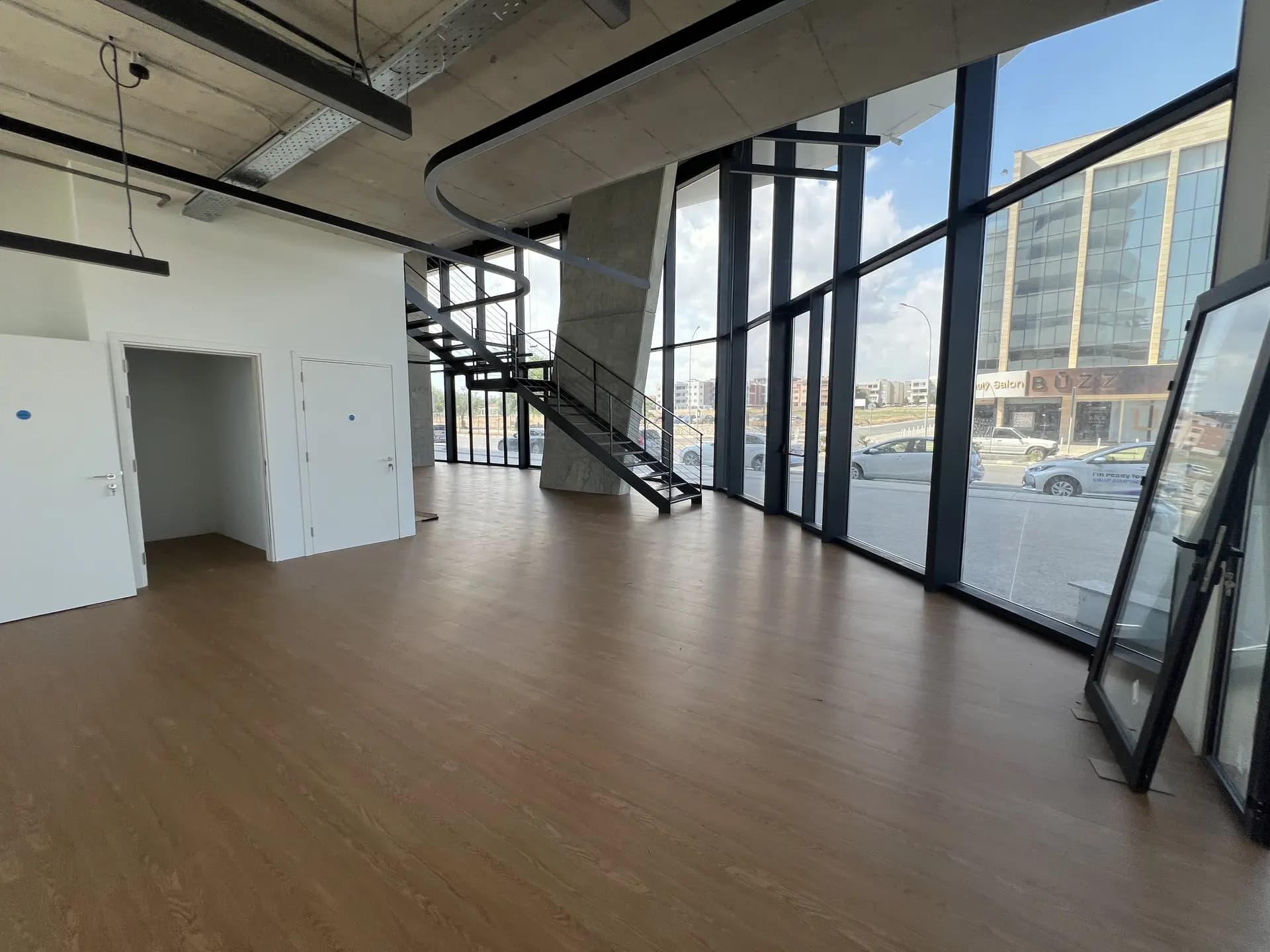
Start researching areas before you travel. Assess a long-term lease once work, schooling and daily travel are clearer. If those decisions are still open, temporary accommodation can provide time to investigate, provided you understand its cost and extension terms.
Choose an area around an ordinary weekday
Check the journey to work and school at the relevant times, along with access to shops and healthcare. If you plan to manage without a car at first, walk the likely routes and investigate transport options.
At viewings, check cooling and heating, hot water, ventilation, damp, windows, noise and connectivity. Find out who handles repairs and how quickly you can reach the owner. Where possible, ask for previous utility bills to help estimate costs for your household and appliance use.
If you are considering buying, treat the property and transaction checks as a separate project. Allow time for that work and use temporary rental accommodation if you need somewhere to live immediately.
The rent-versus-buy calculator can help compare the financial options against your intended length of stay and budget. Check your residence basis and the suitability of the property separately.
Find out which documents you will receive before paying
Ask the owner or manager:
- Who signs the agreement, and what authority do they have over the property?
- Will the required occupants and full address appear in it?
- What evidence will you receive for payments?
- Whose name is on the utility accounts, and can they be transferred?
- Will the owner need to take part in applications to suppliers?
- Can you receive post at the address?
- What are the cancellation, extension and early-termination terms?
- When and on what conditions is the deposit returned?
Check the immigration office’s, school’s and bank’s requirements separately. A hotel booking provides accommodation; confirm in advance whether the particular procedure accepts it as proof of address.
If an older checklist requires Stamp Duty, check whether that item still applies. The duty was abolished from 1 January 2026. Documents drawn up and signed by at least one party on or before 31 December 2025 remain subject to the previous rules under the applicable conditions. Ask the Tax Department about the procedure for such a contract. Check contract formalities and signature certification requirements separately. Tax Department guidance, repeal law.
Once you know the area, affordable payment and housing documents you need, browse rental properties in Cyprus and compare them against those criteria. Resolve missing details before paying.
After arrival: keep several tasks moving together
The sequence depends on each institution’s requirements. School, housing, bank documents and immigration applications can often progress alongside one another. These dependencies help organise the work:
- Citizenship, family relationship and planned work → procedure → document list and application deadline.
- Expected address and child’s age → school-district enquiry → confirmed enrolment procedure.
- Contract, the parties’ documents and the owner’s involvement where required → utility account transfer → address evidence for recipients who accept it.
- Identity, address and financial information → bank checks → access to an opened account.
- Relevant category and residence conditions → healthcare eligibility check → confirmed enrolment or continued alternative cover.
Keep the outcome of each application or enquiry and establish what the next institution needs.
Record deadlines and submit the relevant applications
Record each person’s entry date, application deadline, responsible office and submission method. Check the documents against the current list and retain proof that the application was accepted.
Booking an appointment, submitting an application, receiving a decision and collecting a document are distinct stages. Once an application is accepted, record how notifications will arrive and who will watch for requests for further information. If you plan to leave Cyprus during processing, check the departure and re-entry conditions for your category.
Start school arrangements while other applications progress
Before arriving, establish the application process, required documents, teaching language and next step for your child. Once you move in, confirm the address and contact the relevant school or district education office.
The official public primary school procedure provides for children’s enrolment regardless of nationality or their parents’ lawful residence status. School arrangements can therefore progress while the parents’ residence paperwork is pending. Contact the district education office when applying outside the main registration period. The address determines the school district; confirm availability at a particular school separately. Public primary school registration and transfer procedure.
Check the specific rules for secondary or private schools. Include transport, meals, uniforms and extra activities in the budget where they are charged separately from tuition.
Arrange utilities and banking access
At handover, photograph the property’s condition and meter readings. Agree who pays for electricity, water and other services, and for which periods. Obtain confirmation of account transfers where applicable.
Documents, deposits and owner involvement vary by supplier and address. For example, the local water-account transfer procedure in Nicosia requires the parties’ documents and the owner’s involvement. Check with the local supplier for other addresses. Local water-account transfer procedure.
Ask your chosen bank for the document list that applies to your circumstances. Alongside identity and address, it may check tax information, income and the source of funds. Prepare clear evidence and allow time for follow-up questions. Keep another way to pay rent and day-to-day expenses until the account is open and you have checked that you can use it. Information the bank checks about its customers.
Handle tax registration as a separate task where required. Registration provides a Tax Identification Number (TIN/TIC). Tax residency is assessed under separate criteria. Official information on tax registration.
Use a family action plan
Return to the family with different citizenships: the first adult is Polish, while the second adult and child are citizens of a country outside the EU. Planning dates organise everyday tasks; mandatory deadlines come from the relevant procedure. Fill in the actual entry and application dates.
1. Address documents
- Depends on: each recipient’s requirements and the documents the owner supplies.
- Responsible: both adults.
- Timing and review: agree the documents before paying for a long-term rental; check progress weekly after moving in.
- Result: a contract and address evidence accepted by the relevant recipient.
- If delayed: ask about an acceptable substitute and recalculate temporary accommodation costs.
2. Immigration applications
- Depends on: the chosen procedures, complete documents and a joint visit for the family route.
- Responsible: each adult for their own application; the first adult for the child’s.
- Timing and review: start before travelling. In this example, submit MEU1 and MEU2 applications within four months of each person’s entry; check readiness weekly until submission.
- Result: separate proof of acceptance for each application.
- If delayed: ask the department for an acceptable solution before the deadline. Track the appointment booking and the actual submission as separate steps.
3. School
- Depends on: the child’s age, actual address and the chosen school’s procedure.
- Responsible: the second adult.
- Timing and review: make contact before travelling; once the address is settled, agree the next step and date with the school or education office.
- Result: confirmed enrolment.
- If delayed: contact the district education office for a public primary school, or the private school directly. Begin while the parents’ residence applications are in progress.
4. Utilities
- Depends on: the contract, supplier terms and owner involvement where required.
- Responsible: the second adult.
- Timing and review: agree the procedure before moving in, record readings at handover and obtain the next date from the supplier.
- Result: confirmation of account transfer or an agreed payment arrangement.
- If delayed: establish the missing steps and retain payment records.
5. Bank
- Depends on: the chosen bank’s checklist and the customer’s documents.
- Responsible: the first adult.
- Timing and review: request the checklist before travelling and check progress weekly. This is the family’s review schedule; account-opening time depends on the bank’s process.
- Result: an open, usable account.
- If delayed: provide further information and use the payment method already available.
6. Healthcare cover
- Depends on: policy terms and a separate assessment of GeSY eligibility.
- Responsible: each adult for themselves; the first adult for the child.
- Timing and review: arrange cover from day one and set a renewal reminder based on the insurer’s rules.
- Result: a valid policy or confirmed system enrolment.
- If delayed: arrange continued suitable cover before the policy expires.
7. One-month review
- Depends on: records and confirmations from the previous tasks.
- Responsible: both adults.
- Timing and review: one month after arrival, then according to the dates of outstanding applications.
- Result: a list of unresolved matters, next actions and the available reserve.
- If delayed: deal immediately with any approaching mandatory deadline.
If you are moving alone, keep protected document copies and backup account-recovery methods separately from your phone.
If a document or decision is delayed
A backup plan should answer three questions: what can you do now, how much will waiting cost, and by what date must you choose another course of action?
A certificate or translation is still being prepared. Ask the receiving authority which options are acceptable and whether you can complete the required step in time. Keep its reply. Limit non-refundable spending until the position is clearer. If timely lawful submission is at risk, establish an acceptable solution before the deadline.
A utility bill is unavailable for proof of address. Find out when it will be issued and ask the specific recipient about an alternative. Agree that alternative with the organisation accepting the documents. Calculate the cost of extending temporary accommodation if needed.
The bank requests further information. Obtain the exact list, gather evidence and check your available method for paying current expenses. Postpone a major commitment if paying it depends entirely on the pending account.
The chosen school has no place available. For public primary education, contact the district education office about enrolment at your actual address and the transfer procedure. This office also handles enrolment enquiries after the main registration period. For a private school, check availability directly and consider other options. If your housing choice depended on a particular school, reassess the area and journey before signing a long-term contract. School-district rules and applications outside the registration period.
Access to public healthcare is taking longer than expected. Establish which conditions or documents are outstanding and maintain suitable cover. Keep the policy in place while the application awaits confirmation.
Suppose a utility bill is still being prepared and the immigration application deadline is approaching. The second adult asks the supplier for an issue date, while the first asks the receiving office which address evidence it accepts. The family keeps the response and prepares the remaining documents in parallel. If the office requests another document, they establish an acceptable submission and continued-stay procedure before the deadline.
During a delay, work from the current deadline for your authorised stay. Ask the Migration Department whether and how it can be extended before that period ends.
One month later: review outstanding matters
Bring together all open applications and enquiries. For each, answer five questions:
Which action or decision is still pending?
What is missing, and who must supply it?
Who owns the next step, and when will they complete it?
Is a mandatory deadline or document expiry approaching?
Will accessible funds and healthcare cover last through the waiting period?
Act immediately if a mandatory deadline is at risk. For everything else, assign the next action, a responsible person and a review date.